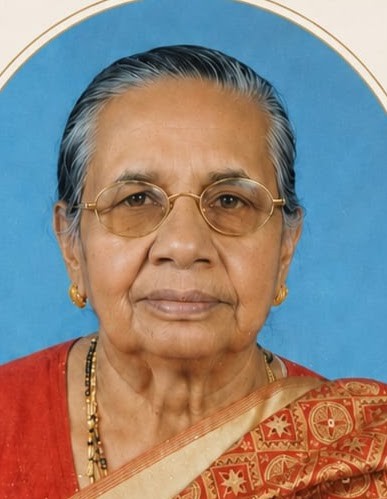
It is not teachers within four walls of the classroom alone who hone responsible citizens out of brash and uncouth students. This is especially true with those studying in boarding schools, away from comfort of home. My younger brother David and I did High School together in St. Joseph’s Boys’ Higher Secondary School located in the quaint and sleepy Coonoor, a town nestled within the picturesque Nilgiris in neighboring Tamil Nadu.
It took a team who toiled day and night to help us homesick boarders feel at home-Dhobis, cleaners, cooks, gardeners, the on-campus storekeeper and watchmen.
Besides, we were privileged to have among us Ms. Beatrice Daly, who resided within the school. We called her Matron. It was to her humble facility within the boarding, an infirmary to us, where our feet used to take us, to seek comfort more than medicines when we took ill, or simply ‘did not feel well’. It was when the seemingly thick-skinned youth felt unwell that they badly missed distant home.
It was when fever, running nose, or the occasional bad tummy struck that we guys missed our mother. Matron would, with kindness, and gentle firmness take over as ‘mother away from home’. The unwell who she felt genuinely needed rest would be ‘admitted’. She would treat them with medicines she stored in a shelf. And feed them with bread and sambar, which she firmly believed was panacea for most ailments boarders used to fall victims to, in the cold Coonoor weather. She ensured, as a matter of fairness that the same rules applied to her flamboyant son Cyril, who also boarded at school.
David, who took ill with Chicken Pox was handled delicately as china, till it was safe for him to travel home to recuperate from the highly contagious infection.
It was her empathetic, kind, loving, yet firm disposition to boarders that had my mother establish ‘hotline’ with Matron, and never failed to visit her whenever she visited her two sons at school.
It was in my crucial class X that I developed an itch above the inner aspect of the ankle of one of my legs. Incessant scratching resulted in an oval weepy lesion. It didn’t look good. I decided to seek matron’s help. Taking a look at it, she asked me ‘do you wash your socks?’. A typical boarder’s answer was an affirmative ‘NO’. I knew Matron would only buy truthfulness. ‘That is why you have developed the eczema’. Her confidence impressed me. Moreover, I learnt the name of a skin disease in the process, in ‘Eczema’.
‘I am not prescribing any medication. Wear your socks only after washing them regularly’. She ordered. The used socks which used to be rolled tightly into round pieces of fabric, and tucked tightly away into the leather shoes and canvas shoes I wore to class and the playground, respectively, soon found themselves hanging hesitantly from the nylon twine I tied across the bed legs in the dormitory, struggling to dry themselves in the cold dormitory interiors.
Lo and behold! With time, the eczema healed without medication. But with commonsense of a woman who was familiar with wayward ways of the boarders. Accurate diagnosis and intelligence of a wise and hardened lady did the trick, and also instilled personal cleanliness in me.
Numerous men, schooled in the residential school in Coonoor years ago, who found motherliness in a ‘mother away from home’ was truly saddened and heartbroken when Matron was called to her eternal home on June 13 this year.
It is to the loving memory of this lady who taught me common sense, and a thing or two about personal cleanliness, and quick-thinking outside the four walls of a formal classroom, that I gratefully bow on this year’s Teacher’s Day, being celebrated today.


September 6, 2026 at 10:44 am
A great tribute to the charming lady …As a day-scholar and studied only till sixth standard I didn’t have a chance to interact with her …
Selfless service …Hats off
LikeLike
September 6, 2026 at 12:01 pm
a great loss; that; Richie!
LikeLike